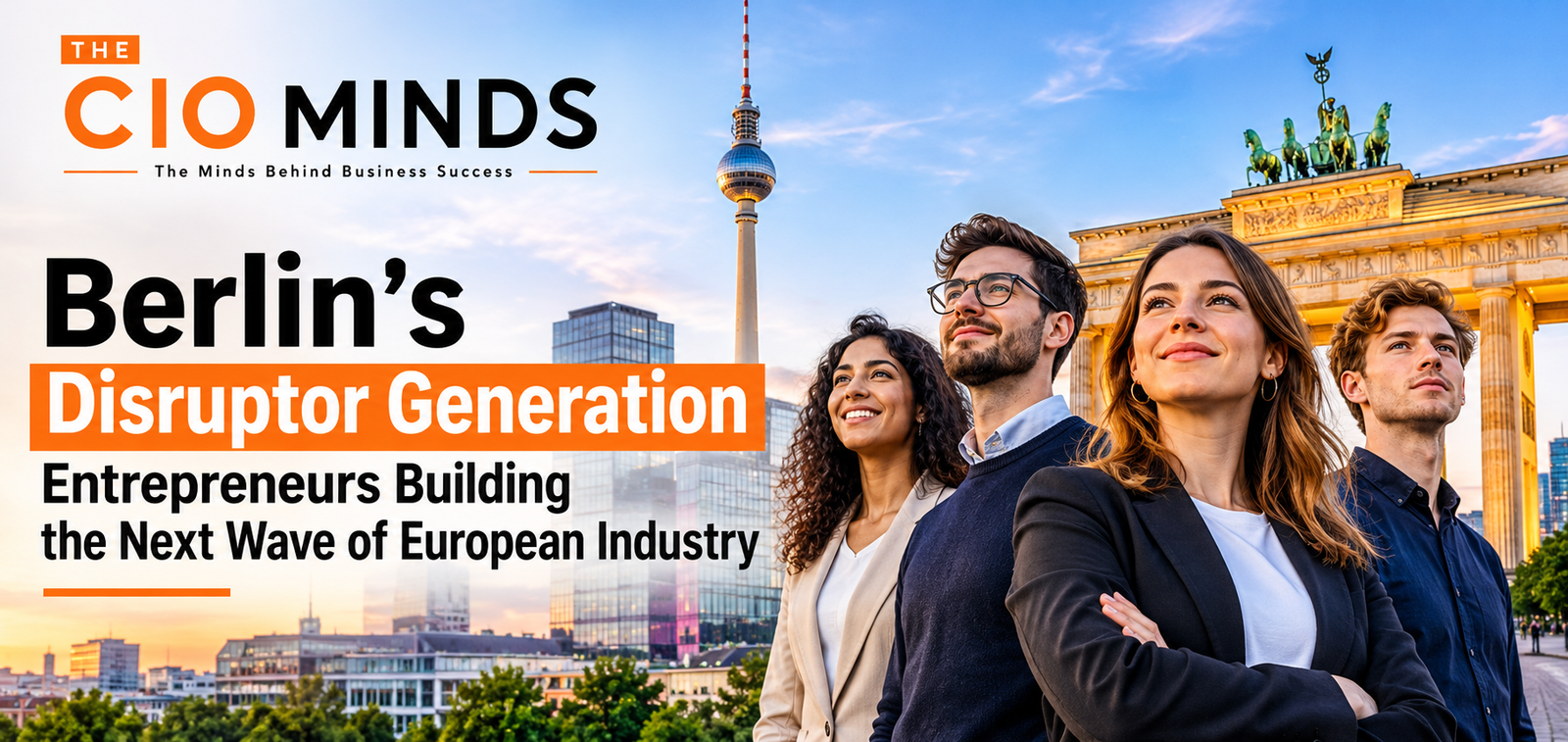
Ask a Berlin cab driver where the money is and he’ll point you toward Frankfurt. Ask where the odd, half-crazy ideas come from and he’ll stay quiet for a second, then probably tell you about his nephew’s startup. Berlin has spent about fifteen years as Germany’s scruffy younger sibling, and that scruffiness is turning out to be useful.
What follows is my attempt to explain how Berlin entrepreneurs are shaping the next generation of European industries, what sets them apart from the founders before them, and where the story still has gaps.
It started with cheap rent
After 1989 the city had empty buildings, low rents and almost nobody demanding quick profits. Artists arrived first. Programmers followed. Failing cost next to nothing, so people tried things that would have been laughed out of a London pitch meeting. That low-cost playground is the root of the Berlin startup ecosystem, and it’s why people from dozens of countries ended up here instead of in a pricier capital.
The first wave was mostly about consumers. Online fashion, food delivery, music streaming, mobile banking. Zalando, Delivery Hero, SoundCloud and N26 all came out of this city. Some did well, some got bruised, but the real payoff was the people who left those companies and started their own. That’s how scenes grow. Not through grand plans, just through employees quitting.
From apps to atoms
Something has changed in the last few years. Plenty of Berlin entrepreneurs now spent their twenties watching apps get copied in a week, and they’d like to build something harder to clone. So a growing share of Berlin technology startups work on energy, mobility, health and factory software instead of another shopping app.
Think heat pumps, battery management, diagnostic tests, or tools that warn you a machine will break before it does. Nobody posts about these on social media. They sell anyway, because the customer already has the problem and already has a budget.
The city was industrial first
People forget that Berlin made things long before it threw parties. Siemens, AEG and Borsig all grew here, and Siemens is currently turning its old Siemensstadt grounds into a modern campus. That history left engineering schools, supplier networks and a basic comfort with physical products.
Newer founders borrow from it quietly. They hire engineers who know what a tolerance is, team up with old manufacturers, and sometimes rent space in former factories whose floors can actually carry heavy machinery.
Old companies, new partners
Traditionally, German business innovation happened inside established firms, especially the family-run Mittelstand companies that dominate tiny global niches. They engineer beautifully. Software, less so. Berlin founders spotted that gap early.
So the typical deal looks like a handshake rather than a fight. The startup contributes speed and code. The older company contributes customers, certification experience and decades of data. It takes patience, though. A Mittelstand buyer might want a year of pilot projects before signing anything, and founders who can’t wait that long don’t last.
Talent from everywhere
TU Berlin, Humboldt University, the Charité hospital and a ring of research institutes keep supplying scientists and engineers. Add a constant stream of people from abroad and the working language of most Berlin technology startups becomes English. That sounds minor until you try hiring a machine-learning specialist from Lagos or Bangalore into a team that only speaks German.
Money plays a part too. Salaries and rents are lower than in London or Paris, so a seed round goes further. The gap has shrunk as housing prices climbed, but it hasn’t vanished.
The hangover
Funding got tight after 2022. Rates rose, valuations fell, and several famous names cut staff. For a while the mood across the Berlin startup ecosystem was grim, and I remember how quickly the tone at events changed from hype to caution.
Honestly, I think the correction did some good. Founders now talk about margins, customers and runway before they talk about growth. Investors ask harder questions. That suits industrial businesses, where products take years to mature and mistakes are expensive.
Paperwork, always paperwork
No fair article about Germany skips the bureaucracy. Permits crawl, forms multiply, and a few offices still seem attached to the fax machine. Tesla’s factory just outside the city showed both the region’s pull and how slowly approvals can move.
Founders grumble about it constantly, and they’re right to. But strict rules have a flip side in healthcare, finance and data. Customers trust products that survived tough checks, so smart founders treat compliance as a selling point.
The bigger picture
Step back and the real stake is European industry transformation. Steel and chemicals need to cut emissions, transport is going electric, supply chains are being rebuilt after the pandemic, and factories are going digital. One city can’t deliver all of that. Berlin’s share is software, energy ventures and a habit of asking why things have always been done a certain way.
There’s a cultural piece as well. The city draws people who would rather build something new than polish something old, and Europe’s older industries could use some of that energy.
Where it falls short
It isn’t a flawless story. Late-stage funding is thinner than in the United States, so growing companies lean on foreign investors. Housing costs have pushed out some of the people the scene depends on. Hardware companies burn cash for years before revenue shows up, which tests everyone’s nerve. And the old talk about “the next Silicon Valley” was simply wrong. Berlin is something else.
Then there’s follow-through. Plenty of promising prototypes die between the lab and the factory floor. Going from a slick demo to reliable mass production is a different skill from raising a seed round.
What other founders can borrow
You don’t need a Berlin address for any of this. Start with a customer problem that already has a budget. Partner with an established company early and expect it to move slowly. Build compliance into the product from the first month. Keep costs low while you learn. And choose problems dull enough that nobody else is racing you.
The short version
Berlin began as a cheap place to experiment and has grown into something more serious. Its founders are moving from apps toward energy, machines and medicine, and they’re doing it next to older companies, not against them. If that partnership holds, German business innovation could get a second wind, and the wider push for European industry transformation will have a source of fresh ideas close to home.
Berlin still has plenty to prove. But the direction is clear, and it points at real products for real industries.
FAQ
1. Who are Berlin’s disruptor generation entrepreneurs?
Berlin’s disruptor generation entrepreneurs are innovative founders, business leaders, and technology pioneers transforming traditional industries through digital solutions, advanced technologies, and sustainable business models.
2. Why is Berlin becoming a major hub for European entrepreneurs?
Berlin offers a strong startup ecosystem, access to international talent, venture capital opportunities, research institutions, and a supportive environment for innovation, making it an attractive destination for entrepreneurs.
3. Which industries are being transformed by Berlin’s emerging entrepreneurs?
Key industries include artificial intelligence, fintech, clean energy, biotechnology, mobility, manufacturing, cybersecurity, and digital healthcare.
4. How are Berlin startups contributing to the future of European industry?
Berlin startups are introducing innovative technologies, improving operational efficiency, developing sustainable solutions, and creating new business models that strengthen Europe’s industrial competitiveness.
5. What role does artificial intelligence play in Berlin’s entrepreneurial ecosystem?
Artificial intelligence helps Berlin-based companies automate operations, improve decision-making, develop intelligent products, enhance customer experiences, and accelerate industrial innovation.
6. How are Berlin entrepreneurs supporting sustainable business development?
Many entrepreneurs are focusing on renewable energy, circular economy solutions, resource efficiency, green mobility, and climate technologies to support Europe’s sustainability goals.
7. What challenges do emerging entrepreneurs in Berlin face?
Common challenges include securing investment, managing operational costs, navigating European regulations, accessing skilled talent, competing internationally, and scaling innovative business models.
8. How does Berlin attract international startup founders and investors?
Berlin attracts global entrepreneurs through its multicultural business environment, international talent pool, established startup networks, research opportunities, and access to the wider European market.
9. What opportunities does Berlin offer for the next generation of industrial innovation?
Opportunities include smart manufacturing, industrial automation, AI-powered production, clean technologies, advanced materials, robotics, and digital infrastructure.
10. What is the future outlook for Berlin’s disruptor generation entrepreneurs?
Berlin’s entrepreneurial community is positioned to play an important role in shaping Europe’s industrial future by combining technological innovation, sustainability, investment, and global business collaboration.