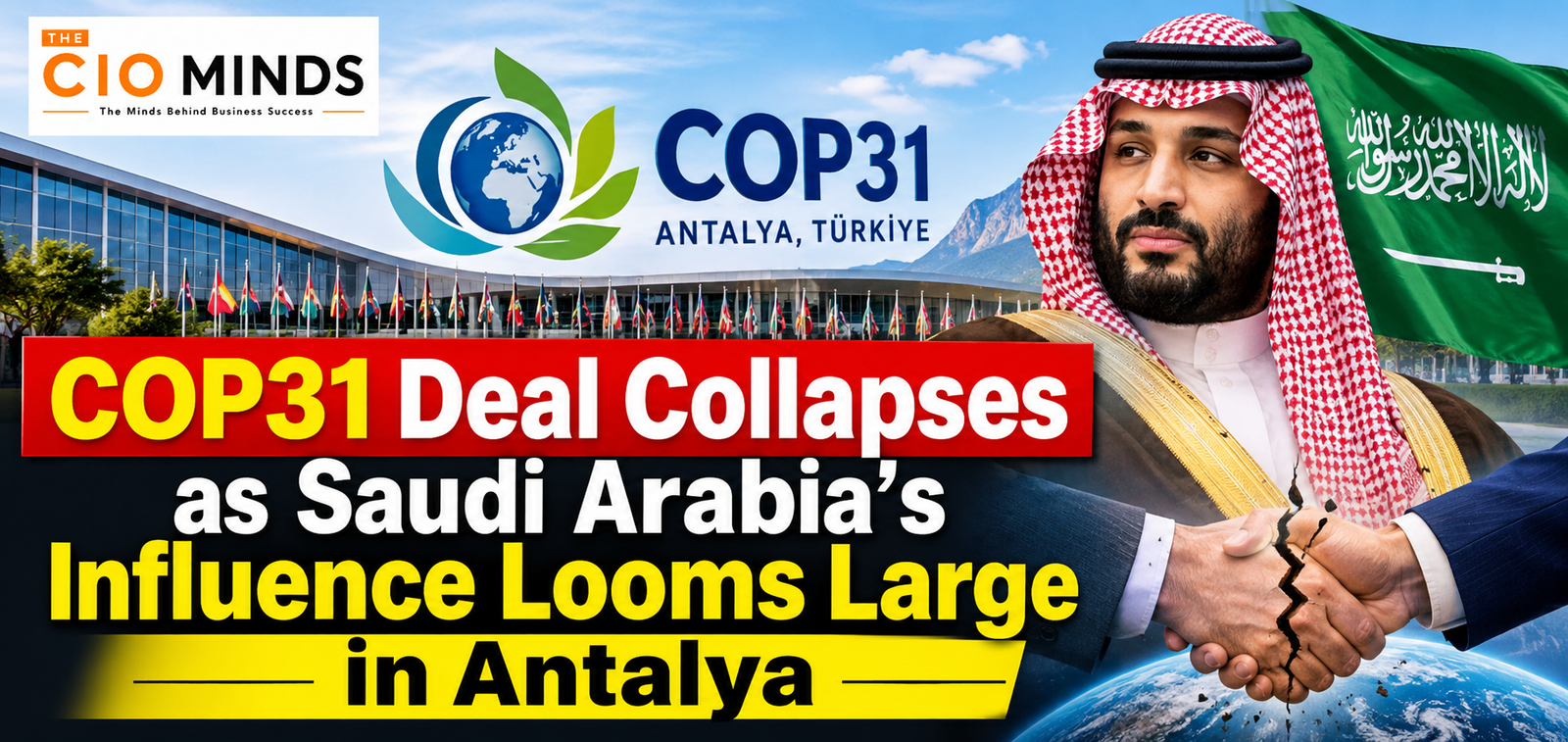
The UN climate summit in Antalya, Turkey, ended without an agreement on Sunday, and Saudi Arabia’s role in the talks is now under scrutiny. The failed COP31 deal left countries split over whether the final text should call for a move away from coal, oil and gas. Reuters reported that Riyadh was at the forefront of resisting such language. The Reuters page itself was blocked for me, so this article draws on other outlets covering the same story.
How the Talks Broke Down
The two additional days did not help reach any agreement. The president of the summit, Murat Kurum, announced at the closing plenary session that “there is no agreement on this text”. No decisions were thus agreed. Based on media reports, this is the first time after Copenhagen 2009 that a UN climate summit has failed due to lack of agreement on the final text.
Saudi Arabia at the Centre
Negotiators claimed that Saudi Arabia was strongly opposed to any mention of fossil fuels in the draft document, with Russia and other countries supporting this stance. According to Gulf News, Saudi Arabia would rather focus on carbon capture and storage technology. Negotiators from Europe, small islands nations, Latin America, Asia and Africa also said to Reuters that Saudi delegates had frequent access to the process, and thereby exerted undue influence during the COP31 negotiations.
The Chatham House mentioned that Saudi Arabia, which is usually known to hinder progress during these summits, continued to do the same during COP31 deal. The same period saw Saudi Arabia signing a major agreement for wind and solar energy in the hosting nation, Turkey.
The EU Holds Its Ground Too
It was not only the Saudis who refused to concede anything. Reuters noted that the European Union had also become unyielding. Once the proposed text made no mention of fossil fuels, the EU and some vulnerable nations turned it down. The climate minister of Ireland, Darragh O’Brien, who spoke on behalf of the EU, described the proposal as inadequate. Some small nations vulnerable to rising waters and climate catastrophes believed that the draft did not meet their needs and served fossil fuel producers.
A Hasty Get-Together
There was a lot of chaos in the last days of the summit. After the threats of a walkout on Saturday, Turkey and Australia organized an emergency meeting between the EU and the Saudis. No agreement was reached. The delegates had already spent almost two weeks trying to reach an agreement and continued their deliberations beyond the deadline, but to no avail.
There Were Other Issues Unresolved Too
Apart from fossil fuels, there was another unresolved issue. According to Gulf News, the countries failed to sort out issues concerning financing, which included the amount of finance that would go to poor countries in adapting to climate change. For these countries, this is as crucial an issue as the one about coal, oil, and gas.
Why Does It Matter?
Fossil fuels are the main cause of climate change; therefore, the controversy lies at the core of the purpose of these summits. Without agreement at COP31, there will be no new message about reducing dependence on fossil fuels. Those in favor of the Saudi Arabian stance maintain that countries have the right to determine their own ways of using energy and reduce emissions through the use of technology. Their opponents argue that just a few producers can veto the wishes of the majority.
Next Steps
Watchers will turn their attention to the upcoming discussions as well as the actions of individual nations. Some may continue to pursue their climate change goals, while others could say that there is a need for changes in the United Nations consensus approach. The failure of the COP31 deal could rekindle debates over the access of the oil-exporting nations at such meetings.
Conclusion
The summit of Antalya demonstrated how difficult it had become to reach a consensus concerning fossil fuels. The decisive role of Saudi Arabia cannot be overlooked here, but the tough approach of the European Union has also been a factor. The collapse of the COP31 deal has left the issue of language and funding for adaptation open.