Ask a stranger what Paris sells, and you’ll get the usual list. Handbags. Perfume. Champagne, maybe a joke about croissants. All true, and nobody at Hermès is losing sleep over it.
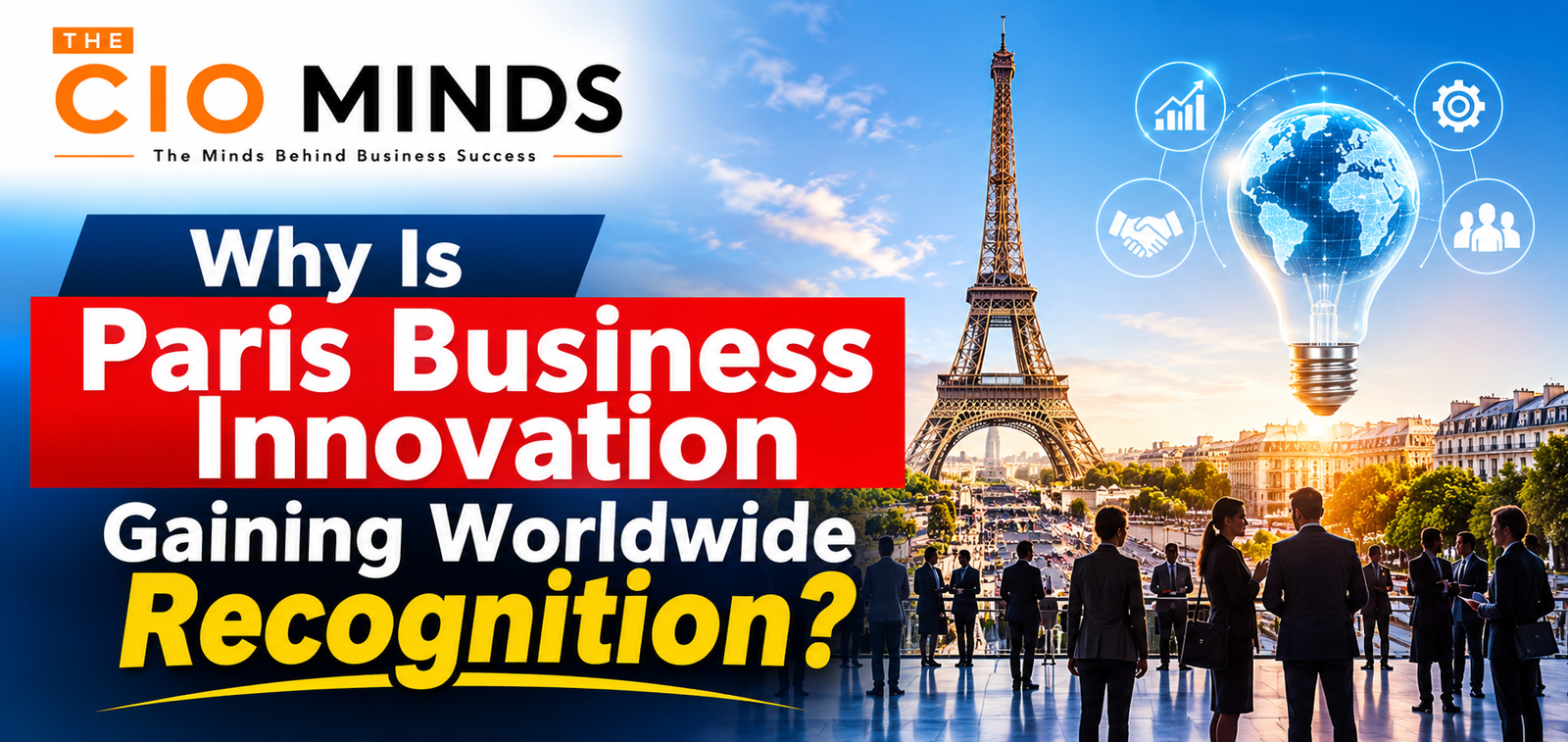
But spend a week around Station F, or in the cafés where seed-stage teams argue about pricing over bad espresso, and the picture changes. The engineers outnumber the sommeliers. Pitch decks are written in English. The customers are in Munich, Chicago and São Paulo. This is Paris business innovation as it actually looks today, and it has very little to do with the shop windows on Avenue Montaigne.
How the Shift Got Started
It didn’t happen by accident, though it didn’t happen overnight either. The French state decided around 2013 that startups deserved attention, and La French Tech gave young companies a common banner to wave abroad. Bpifrance, the public investment bank, started writing checks that private funds were still hesitant to write. Then in 2017 Station F opened inside a giant former freight depot, and suddenly the whole scene had a physical address you could point to.
The talent was already there. French engineering schools have turned out serious mathematicians for generations, and that background happens to suit machine learning very well. When researchers who’d spent years at big American labs came home and founded Mistral AI in 2023, it sent a message to investors: you don’t have to go to San Francisco to build a frontier model.
Where the Money and Talent Are Going
Anyone trying to follow Paris emerging industries could start by looking at who’s hiring. A few fields keep showing up.
AI is the obvious one. Beyond Mistral, several large tech companies run research teams in the city, and there’s a crowd of small outfits working on language, vision and robotics.
Fintech is another strength. Qonto built accounts and tools for small businesses, while Ledger became known around the world for hardware that protects crypto holdings. In health, Doctolib took the humble appointment booking and turned it into a platform used across France, Germany and Italy.
Then there’s the repair economy. Back Market launched in Paris in 2014 and now sells refurbished phones and laptops in many countries. It treats a used device as a product worth selling well, not as a compromise.
What ties these together isn’t a technology. It’s a taste for dull, expensive problems that big customers will pay to fix.
Founders Who Skip the Home-Market Phase
French startups run into a math problem early. The domestic market is decent but not huge, and the rest of Europe changes language and regulation every few hundred kilometers. So Paris entrepreneurs usually plan for several countries before they’ve even landed their first hundred clients. Contracts get drafted in English. Sales hires are made in London or Berlin.
BlaBlaCar helped set the tone here. It started as a carpooling service in France and spread across dozens of countries, proving that a Paris company could be international from the beginning. Contentsquare, which analyzes how visitors move through websites, did something similar and earns much of its revenue outside France. The newer crop of founders studies both of them closely.
There’s a human side as well. A lot of people running these companies spent years abroad first, in New York or London or Singapore, and came back with contacts and a looser sense of what’s possible. They hire from everywhere. Walk through a co-working floor and you’ll hear five languages before you reach the coffee machine.
The Old Guard Isn’t Sitting Still
It would be lazy to cast this as young startups versus stuffy corporations. French business innovation is more of a joint project than that. Dassault Systèmes, Capgemini, Schneider Electric and Thales all have deep engineering cultures and customers on every continent, and many of them now run venture arms or accelerator programs aimed at smaller firms. Even the luxury houses are in the game, funding resale platforms, traceability tools and beauty tech.
The government adds its own push. Since 2018 the Choose France summit has brought foreign executives to the country to announce investments in factories, data centers and labs. You can argue about the politics all day, but the effect is real: money and attention flow in, and smaller companies get to ride the wave.
Influence That Goes Beyond Sales
Revenue is one way to measure reach. Rules and standards are another, and Europe has been unusually assertive there. Privacy, competition law and sustainability requirements are stricter in the EU than in most places, and Paris companies tend to build those expectations into products from day one. A health platform designed around tough data protections is simply easier to sell to a cautious hospital system overseas.
That’s why France global business expansion can’t be reduced to export statistics. When a French tool becomes standard inside a foreign clinic network, or a refurbished marketplace changes how Americans think about buying a phone, the country picks up a quieter kind of authority. People start to associate France with technology they can trust, not only with beautiful objects.
So here’s how Paris business innovators are expanding France’s influence in global markets: they pair real technical depth with a European habit of caring about rules, and they take both along when they cross borders. Paris business innovation ends up exporting values as well as software.
What Still Gets in the Way
None of this is guaranteed, and it would be dishonest to pretend otherwise. Late-stage funding in Europe remains thinner than in the United States. Ambitious French companies often need American investors to reach the next round, and some end up moving their headquarters across the Atlantic. Payroll costs and hiring rules weigh on small teams. London, Berlin and Amsterdam compete hard for the same engineers, and rent in the capital doesn’t make recruiting any easier.
Perception is another hurdle. To plenty of international buyers, France still means luxury first and software a distant second. You don’t fix that with a slogan. You fix it by shipping reliable products for years.
What Comes Next
A few open questions will shape the next chapter. Can the AI labs turn research strength into durable companies? Will European pension funds and corporations start writing the very large checks that scale-ups need? And can Paris emerging industries in energy, health and advanced materials grow from promising startups into global leaders?
There’s reason to be hopeful. Paris entrepreneurs are building companies that look outward from the first week, and bigger French firms are learning to move a bit more like startups. Together they’re stretching French business innovation well past its glamorous past. Anyone tracking France global business expansion over the next ten years should keep an eye on the labs and shared offices as closely as the runways.
Paris will always be a capital of style. The newer story is that it’s also becoming a capital of people who build things, and the world is starting to buy what they make.
FAQ
1. Why is Paris becoming a global hub for business innovation?
Paris is emerging as a global business hub due to its strong startup ecosystem, advanced technology, research institutions, skilled workforce and international investment opportunities.
2. What industries are driving business innovation in Paris?
Key industries include artificial intelligence, fintech, fashion, luxury goods, aerospace, healthcare, green technology and digital services.
3. How is technology transforming businesses in Paris?
Businesses in Paris are adopting AI, automation, cloud computing and data analytics to improve productivity, enhance customer experiences and develop innovative solutions.
4. What role do startups play in Paris Business Innovation?
Startups contribute to economic growth by introducing new technologies, creating employment opportunities and developing innovative products and services across multiple industries.
5. How does Paris attract international investors?
Paris attracts international investors through its business infrastructure, access to European markets, startup opportunities, research capabilities and growing technology ecosystem.
6. How is artificial intelligence supporting business growth in Paris?
AI is helping Paris-based businesses automate operations, analyse market trends, personalise customer services and improve decision-making across industries.
7. What makes Paris attractive to international entrepreneurs?
Its strategic European location, diverse talent pool, business networks, innovation centres and access to international markets make Paris attractive to entrepreneurs.
8. How is sustainability influencing business innovation in Paris?
Companies are investing in renewable energy, sustainable mobility, circular economy solutions and environmentally responsible technologies to support long-term business growth.
9. What challenges do businesses face in Paris?
Businesses may encounter challenges such as high operating costs, regulatory requirements, talent competition and market uncertainty while expanding their operations.
10. What is the future of business innovation in Paris?
Paris is expected to strengthen its position in AI, sustainable technology, fintech and digital transformation, creating new opportunities for entrepreneurs, investors and global businesses.